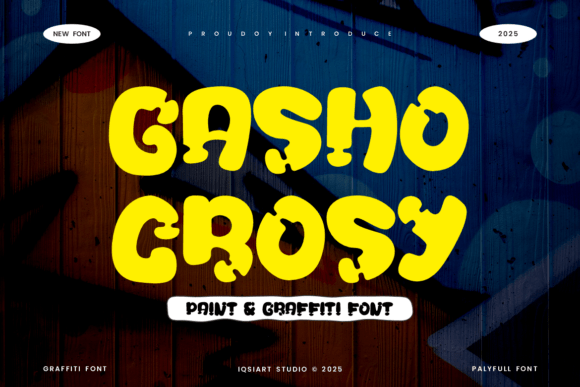
Gasho Crosy: Bold Display Font for Urban Branding
It was a Tuesday afternoon, and I found myself staring at a blank brand board, trying to figure out how to make a new café’s identity stand out. The client wanted something that felt fresh, energetic, and a little edgy—something that could speak to the local hip-hop scene and the neighborhood’s street art culture. That’s when I pulled up Gasho Crosy. It didn’t take long to realize this font had the kind of raw energy that could turn a simple logo into a statement.
Gasho Crosy for Streetwear Branding and Hip-Hop Events
Gasho Crosy is exactly what you’d expect from a graffiti-inspired display font—it’s loud, it’s confident, and it doesn’t shy away from making an impression. Its chunky letterforms, with those paint-drip details and playful curves, give it a dynamic feel that screams urban style. When I tested it on a streetwear brand’s logo concept, it immediately added that punchy, high-energy vibe that’s perfect for hip-hop events or boutique fashion labels.
Using Gasho Crosy in a streetwear context means it works best as a headline or accent font. It’s not meant for body text, but when used sparingly, it can elevate a brand’s visual language. I paired it with a clean sans-serif for the tagline, and the contrast made the whole design feel balanced yet bold.
Gasho Crosy for Packaging Design and Product Labels
I recently worked on a skincare product line that needed a visual identity that felt modern and approachable. The client wanted something that stood out on the shelf without being too flashy. Gasho Crosy, while definitely attention-grabbing, actually worked well when used in small doses on product labels and packaging headers. The chunky forms gave it a tactile, handcrafted feel that aligned with the brand’s artisanal aesthetic.
One thing to note is that Gasho Crosy isn’t ideal for small print sizes. If you’re using it on a label or a packaging mockup, make sure there’s enough space to let the details breathe. Otherwise, it can look cluttered or lose its impact.
Gasho Crosy for Web Headers and Social Media Graphics
When I added Gasho Crosy to a website header for a local music venue, it brought an instant sense of movement and energy. The playful curves and aggressive shapes made the site feel more alive, especially when paired with bold background colors and dynamic imagery. On social media, it worked great for promotional posts and event announcements—its eye-catching nature helped content stand out in crowded feeds.
However, I wouldn’t recommend using Gasho Crosy as the main body text on a website. It’s a display font, not a reading font. For web use, it’s best reserved for headlines, buttons, or section titles where it can add visual interest without compromising readability.
Gasho Crosy for Business Cards and Print Materials
Testing Gasho Crosy on a business card was a fun experiment. The font’s boldness made the card feel more memorable, and the unique shapes added a personal touch. But again, size matters. In a smaller format like a business card, the details can get lost if not carefully spaced. I ended up adjusting the kerning and leading to ensure the font still looked sharp and legible.
For print materials like posters or flyers, Gasho Crosy can be a game-changer. It adds a sense of urgency and excitement that’s perfect for event promotions or limited-time offers. Just be mindful of the overall layout—too much of it can overwhelm the design.
Gasho Crosy for Brand Identity and Logo Systems
When building a brand identity system, consistency is key. Gasho Crosy is strong enough to carry a logo on its own, but it also pairs well with other typefaces. I found that pairing it with a subtle serif font for subheadings created a nice balance between modern and traditional. This combination worked especially well for a creative studio’s branding project, where the goal was to feel both professional and artistic.
Another consideration is licensing. Before using Gasho Crosy in any client work, I always check the commercial font license. It’s important to make sure the font is properly licensed for all intended uses, whether it’s for a website, printed material, or merchandise.