House Secret: A Friendly Display Font
Working on a branding project for a local café recently, I found myself scrolling through my font library, searching for something that felt just right. The client wanted a visual identity that was approachable and inviting, something that would make customers feel at home. That’s when I landed on House Secret. It’s not just another display font—it has a personality that fits perfectly with the kind of casual, warm vibe a café needs.
House Secret for Café Branding and Menu Design
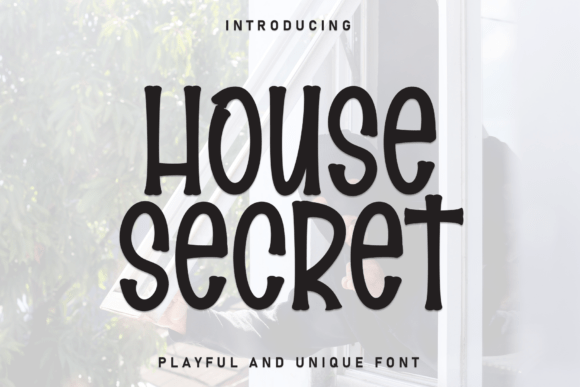
House Secret is a casual and neat display font that combines simplicity with a friendly, approachable vibe. Its clean lines and subtle rounded edges give it a softness that feels welcoming, which made it an ideal choice for the café’s logo and menu design. I started by testing it on a rough logo draft, and immediately saw how it could work as a headline font for the café’s name. The balanced letterforms gave it a polished look without being too rigid.
When I placed it on the menu, it added a sense of clarity and warmth. It wasn’t too bold, but it still stood out enough to draw attention. I paired it with a simple sans serif for body text, which helped create a visual hierarchy without overwhelming the reader. The result was a menu that felt both professional and cozy—a perfect reflection of the café’s atmosphere.
Testing House Secret on Packaging and Labels
One of the first things I did was test House Secret on packaging mockups. I created a few label designs for coffee bags and noticed how the font maintained its legibility even at smaller sizes. The subtle rounding of the letters made it feel more human, which is exactly what the brand needed. It didn’t feel too modern or too traditional—it had a middle ground that worked well for a small, community-focused business.
I also tried it on sticker designs for the café’s takeout containers. The font’s clean lines made it easy to read from a distance, while the friendly curves kept it from looking too corporate. It was a great example of how House Secret can bridge the gap between professionalism and approachability.
House Secret for Social Media Graphics and Web Headers
As the project progressed, I moved into social media graphics and website headers. House Secret proved to be just as effective in digital spaces as it was in print. I used it for Instagram post captions and website hero sections, where it added a touch of personality without distracting from the content.
On the website, it worked well as a headline font for featured posts and product highlights. The font’s balance made it versatile enough to pair with different color schemes and layouts. It didn’t dominate the space, but it still commanded attention when needed. For a brand that wanted to feel authentic and accessible, House Secret was the perfect fit.
How House Secret Handles Different Typography Pairings
When working on the overall brand system, I experimented with pairing House Secret with other fonts. It paired well with a classic serif font for body text, adding a contrast that made the content more engaging. I also tried it with a minimalist sans serif, which created a clean, modern look that worked for digital assets like email templates and social media banners.
For a more creative touch, I used it alongside a handwritten script font for a special promotion. The combination brought a playful energy to the design, which was exactly what the café needed for a seasonal campaign. It showed me that House Secret isn’t limited to just one style—it can adapt to different design needs while maintaining its core character.
House Secret for Business Cards and Printed Materials
Printing is always a good test for any font, and House Secret handled it beautifully. I designed a set of business cards for the café, using the font for the name and contact information. The result was a clean, professional look that still felt personal. The subtle rounded edges made the text feel less stiff, which aligned with the brand’s values.
I also used it on flyers for a local event the café was hosting. The font’s readability at small sizes made it easy to read from a distance, while its friendly tone helped convey the event’s relaxed, community-focused vibe. It was clear that House Secret wasn’t just a pretty font—it had real design functionality that supported the brand’s message.
Considerations for Using House Secret in Brand Systems
Before finalizing the design, I made sure to check the font’s available styles and file formats. House Secret came with multiple weights, which was helpful for creating a consistent visual language across different materials. I also looked into its multilingual support, which was important for the café’s international customers.
One thing to note is that while House Secret is a display font, it works best as a headline or accent font rather than a body text option. It has a certain charm that shines when used in short-form text, such as headlines, logos, or labels. When used in longer paragraphs, it can feel a bit too decorative, so pairing it with a more readable typeface is recommended.
House Secret for Creative Studio Projects and Brand Identity
Since this project, I’ve continued to use House Secret in other creative studio work. Whether it’s for a boutique, a skincare brand, or a handmade shop, the font consistently delivers a friendly, approachable feel that resonates with audiences. It’s a great example of how a well-designed display font can elevate a brand’s visual identity without overshadowing the message.
What makes House Secret stand out is its ability to feel both modern and timeless. It doesn’t have the sharpness of a high-contrast display font, nor the heaviness of a thick sans serif. Instead, it sits in a sweet spot that feels natural and unobtrusive. For designers looking for a font that can bring warmth and clarity to their projects, House Secret is definitely worth considering.