Pencil Crayon Font for Creative Projects
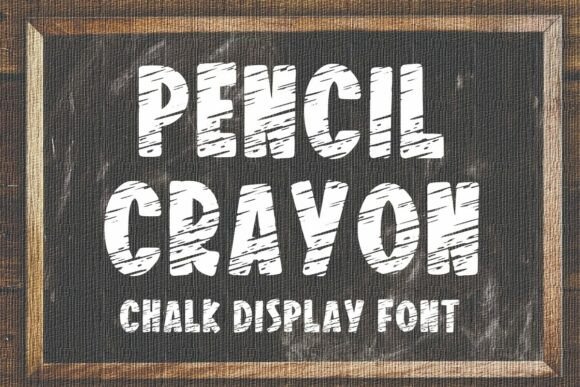
It started with a blank brand board and a client who wanted something that felt personal, approachable, and a little playful. After a few rounds of brainstorming, I landed on Pencil Crayon—a font that looked like it had been scribbled onto a chalkboard by hand. Its soft edges and irregular strokes gave it a warm, authentic feel that perfectly matched the client’s vision.
Pencil Crayon for Logo Design and Brand Identity
As a display font, Pencil Crayon brings a unique energy to logo design. It’s not the kind of font you’d use for body text, but as a headline or accent, it adds character without overwhelming the design. I tested it on a few logo drafts, and what stood out was how it balanced simplicity with charm. The slight imperfections in the letterforms made the brand feel more human, which is exactly what the client was looking for.
When working on brand identity, I always start with the core message. Pencil Crayon helped reinforce that message by evoking a sense of creativity and craft. It worked well alongside a clean sans-serif font for subheadings, creating a visual contrast that kept the design from feeling too busy.
Pencil Crayon for Packaging Design and Product Labels
One of the first places I used Pencil Crayon was on product labels for a small artisanal shop. The font’s hand-drawn quality made the labels feel more personal and tactile, which is essential for a brand that prides itself on craftsmanship. I paired it with a simple serif font for the product names, giving the design a polished yet friendly look.
I also experimented with using it on packaging mockups. On a sticker label, it added a whimsical touch, while on a larger box, it served as a strong visual anchor. The font’s weight and spacing allowed it to scale well without losing its personality, making it versatile for different sizes and formats.
Pencil Crayon for Social Media Graphics and Web Headers
For digital projects, Pencil Crayon proved to be a great choice for social media graphics and website headers. Its bold strokes made it stand out on screens, and the uneven lines gave it a refreshing break from the rigid geometry of most web fonts. I used it for a series of Instagram posts promoting a local event, and it helped create a cohesive visual theme that felt inviting and expressive.
On a website header, it added a sense of movement and creativity. I paired it with a modern sans-serif font for the body text, which created a nice balance between the organic feel of Pencil Crayon and the clean lines of the supporting typeface. This combination worked especially well for a blog focused on handmade crafts and creative living.
Pencil Crayon for Invitations and Greeting Cards
Invitations and greeting cards are where Pencil Crayon really shines. Its chalk-like texture gives it an old-school charm that feels both nostalgic and fresh. I used it for a set of wedding invitations, where it added a personal, handwritten touch without needing to actually write each card by hand.
The font also worked well for birthday cards and thank-you notes. I found that it looked best when used in smaller sizes, allowing the details of the letterforms to show through. For a more dramatic effect, I increased the size and added a subtle shadow, which gave the text a slightly raised, three-dimensional look.
Pencil Crayon for Editorial Design and Print Materials
In editorial design, Pencil Crayon can be a powerful tool for adding visual interest. I used it for a magazine spread about local artists, where it helped highlight quotes and captions. The font’s irregularity made the text feel more dynamic and less static than a standard typeface.
For print materials like flyers and posters, Pencil Crayon provided a strong visual presence. It worked especially well for headings and call-out text, drawing the eye without being distracting. I paired it with a neutral sans-serif font for the body copy, ensuring that the overall design remained readable and professional.
Pencil Crayon for Digital Templates and Commercial Assets
When working on digital templates, such as PowerPoint slides or Canva designs, Pencil Crayon added a unique flair that set the project apart. It was perfect for presentations that needed a creative edge, and its versatility made it easy to adapt to different layouts and styles.
For commercial assets like merchandise and branding kits, Pencil Crayon offered a consistent visual language that could be applied across multiple platforms. I made sure to test it on different materials—like t-shirts, mugs, and business cards—to ensure it maintained its character at various scales and in different contexts.