Pink Line Font: A Stylish Display Type
There I was, staring at a blank brand board, trying to find the right visual voice for a new skincare line. The client wanted something fresh, elegant, and modern—something that felt both luxurious and approachable. I had a few fonts in mind, but nothing quite clicked until I tried Pink Line. It wasn’t just the clean, continuous lines that caught my eye; it was how it made the whole concept feel more cohesive, more intentional.
Pink Line for Logo Design and Brand Identity
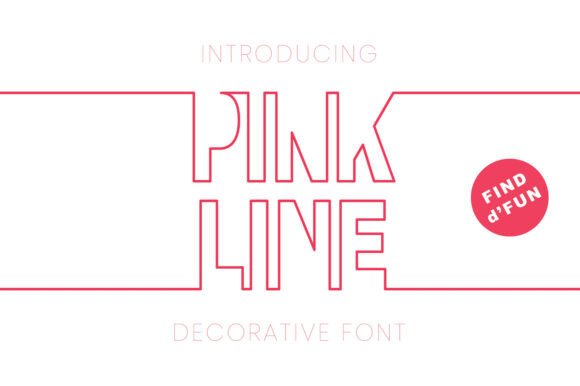
Pink Line is a display font that stands out for its unbroken continuous lines, creating a seamless and elegant design. It’s not your typical sans serif or serif—it has a unique geometric flair that feels both modern and timeless. I tested it on a logo draft, and it immediately gave the brand a sense of sophistication without being too rigid. The uppercase and lowercase styles each have their own personality, which made it easy to balance between bold statements and subtle details.
When used in logo design, Pink Line works best as a headline or accent font. It’s not ideal for long text, but as a primary typeface for a brand’s name or tagline, it adds a level of polish that other display fonts often lack. I paired it with a simple sans serif for body text, and the contrast helped maintain readability while keeping the overall look cohesive.
Testing Pink Line on Packaging Mockups
I took Pink Line to a packaging mockup next. For a skincare product, the font needed to feel premium but not overly complicated. The continuous lines gave the labels a fluid, almost hand-drawn quality that felt organic and inviting. It worked especially well on minimalist packaging, where the font could be the main visual element without overwhelming the design.
The two styles—uppercase and lowercase—were useful in different contexts. The uppercase version was perfect for product names, while the lowercase added a softer touch to ingredient lists or usage instructions. It’s a font that adapts well to different sizes, though I found it best suited for larger text where the details could shine.
Pink Line for Social Media Graphics and Web Headers
On social media layouts, Pink Line brought a sense of movement and energy. I used it for Instagram posts and Twitter headers, and it stood out without feeling too flashy. The continuous lines gave the text a dynamic flow that worked well with modern, flat design trends. It also paired nicely with bold colors and minimal backgrounds, making it a versatile choice for digital branding.
For web design, especially in hero sections or call-to-action buttons, Pink Line made a strong impression. It’s not meant for body text, but as a heading or subheading, it added a layer of elegance that other display fonts sometimes miss. I noticed that when used at larger sizes, the font maintained clarity and didn’t lose its character, which is a big plus for website headers.
Realistic Use Cases for Pink Line
Pink Line isn’t just for high-end brands. I’ve seen it work well in a variety of projects, from boutique identities to handmade shop branding. Its geometric structure gives it a clean, professional feel, while the continuous lines add a touch of creativity. It’s particularly effective in industries that value aesthetics over strict functionality, like fashion, beauty, and lifestyle.
One thing to keep in mind is that Pink Line isn’t the best choice for small text or long paragraphs. Its intricate lines can become hard to read at lower sizes, and it doesn’t offer the same level of legibility as traditional sans serifs. That said, when used appropriately, it can elevate a design in ways that other fonts can’t.
Pink Line for Business Cards and Print Materials
Business cards are a great test for any font, and Pink Line performed well in this context. The font’s continuous lines gave the card a refined look, and the two styles allowed for flexibility in how the information was presented. I used the uppercase version for the business name and the lowercase for titles and contact details, creating a balanced and professional appearance.
For printed materials like flyers or posters, Pink Line worked best as a headline or title. It added visual interest without distracting from the main message. I found that pairing it with a neutral background or a soft gradient helped it stand out while maintaining a sense of harmony.
Font Pairing Tips with Pink Line
When working with Pink Line, I recommend pairing it with simpler fonts to avoid visual clutter. A clean sans serif like Montserrat or Lato makes a great companion, offering contrast without competing. For a more dramatic effect, a serif font like Playfair Display can add warmth and depth, especially in editorial designs or print campaigns.
It also pairs well with script or handwritten fonts for a more personal touch, though I’d use that sparingly. The key is to let Pink Line shine without being overshadowed by other elements. When used in moderation, it can become a defining feature of a brand’s visual identity.
Before finalizing any project with Pink Line, I always recommend testing it across different platforms and sizes. Whether it’s a logo, a website header, or a packaging label, seeing how it performs in real-world scenarios helps ensure it meets the project’s needs. And of course, checking the commercial licensing is a must—especially if you’re using it for client work or commercial products.